
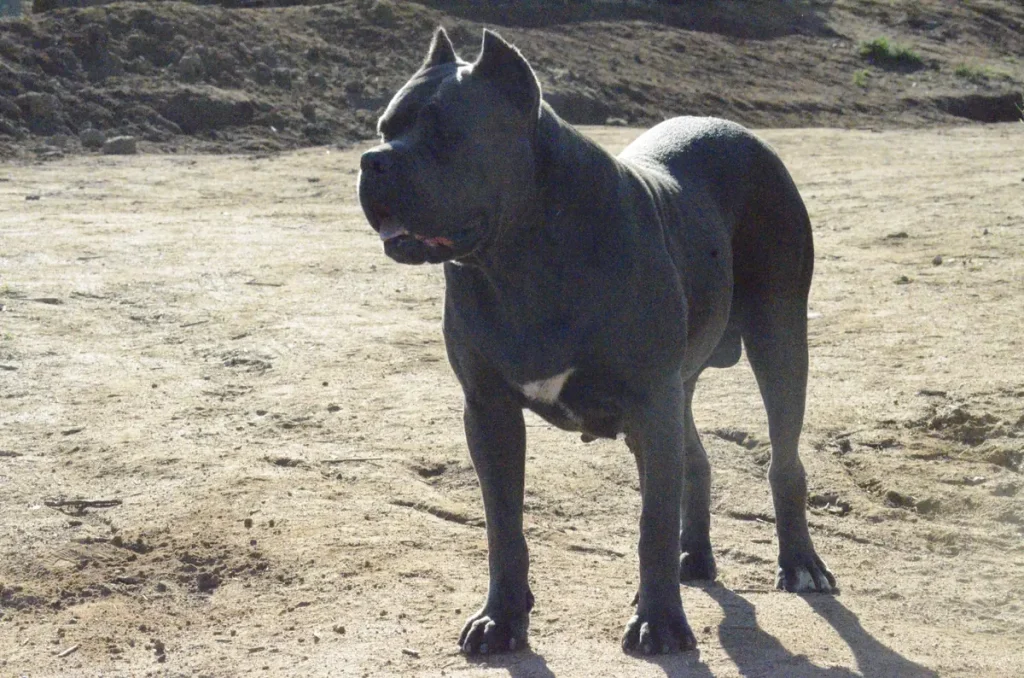
The best family guard dog is the one your household can actually raise, train and exercise. That sounds obvious, but a list that ranks breeds by toughness skips the parts that decide whether a dog works out: size, energy, lifespan, how it learns and what it needs every day. This 2027 roundup compares eight common guardian breeds side by side using AKC breed data, and it says plainly where each one fits and where it doesn’t. It is reviewed for 2027, with breed data current as of November 2026.
We breed Cane Corsos, so you know our bias. Every section below says who the breed suits and who it doesn’t, ours included, and the descriptions come from the AKC, not from us.
Short answer: For a family that wants a calm, imposing home guardian and will commit to training, the Cane Corso, Rottweiler and Bullmastiff are strong choices. For an active family that wants an athletic partner, the Doberman or German Shepherd fits better, and the Giant Schnauzer suits experienced owners who want a big, smart worker. The Belgian Malinois is, in the AKC’s words, a world-class worker, but a hard pet for most homes, and the Boxer is the most playful and least intimidating of the eight.
- Choose a big mastiff-type guardian if you want presence and a calmer pace, and you can handle a dog over 100 pounds.
- Choose an athletic working breed if you run, hike or train dog sports most days.
What makes a good family guard dog?
A good family guard dog is stable, trainable and devoted to its people, and calm enough to live with children and visitors. Guarding is mostly about presence and alertness. A dog that barks at a stranger at the gate and then settles when you say so is worth more than one that reacts to everything.
When you compare breeds, look at:
- Size and strength: can every adult in the house physically manage this dog on a leash?
- Exercise needs: can you meet them every day, in all seasons?
- Trainability: how does the breed respond to training, and how much is needed?
- Lifespan: how many years are you signing up for?
- Health screening: what tests should the parents have?
How do the top family guard dog breeds compare?
Here are the eight breeds side by side, using height, weight and life expectancy from each breed’s AKC page.
| Breed | Height (male / female) | Weight (male / female) | Life expectancy | Exercise (per AKC) |
|---|---|---|---|---|
| Cane Corso | 25–27.5 in / 23.5–26 in | Proportionate to height; often over 100 lb | 9–12 years | “Serious exercise”; at least a mile morning and evening |
| Rottweiler | 24–27 in / 22–25 in | 95–135 lb / 80–100 lb | 9–10 years | Daily exercise; “love swimming, walking, and trotting” |
| Doberman Pinscher | 26–28 in / 24–26 in | 75–100 lb / 60–90 lb | 10–12 years | “A lot of exercise”; large fenced area vital |
| German Shepherd Dog | 24–26 in / 22–24 in | 65–90 lb / 50–70 lb | 12–14 years | “Lots of exercise” |
| Belgian Malinois | 24–26 in / 22–24 in | 60–80 lb / 40–60 lb | 14–16 years | “Daily walks are not enough” |
| Bullmastiff | 25–27 in / 24–26 in | 110–130 lb / 100–120 lb | 7–9 years | Moderate; good walker, not a running partner |
| Boxer | 23–25 in / 21.5–23.5 in | 65–80 lb; females about 15 lb less | 10–12 years | “Ample exercise every day” |
| Giant Schnauzer | 25.5–27.5 in / 23.5–25.5 in | 75–95 lb / 55–80 lb | 10–13 years | “Lots of exercise”; long daily walks and play |
Sources: AKC breed pages for each breed, including Cane Corso, Doberman Pinscher and Belgian Malinois.
Two things stand out. First, the heavy mastiff-type breeds have the shortest life expectancies: the AKC lists 7 to 9 years for the Bullmastiff and 9 to 10 for the Rottweiler, against 14 to 16 for the Malinois. Second, the lighter athletic breeds have the biggest exercise demands. On this list, more size tends to come with fewer years, and less size with more exercise.
1. Cane Corso: is it a good family guard dog?
Yes, for a committed family. The AKC describes the Cane Corso as intelligent, loyal and eager to please, and says the name roughly translates from Latin as “bodyguard dog.” It also says Corsi are assertive and willful and can “end up owning an unwitting owner,” and that socialization and puppy classes are “a must” for a breed this big and strong.
Best for: families who want an imposing, watchful home guardian and will train consistently from puppyhood.
Not ideal for: owners who can’t control a dog that often weighs more than 100 pounds, or who want a low-effort pet. The AKC says Corsos need “serious exercise” and mental work, “or undesirable behavior will result.”
Health screening: the AKC says responsible breeders screen for hip dysplasia, idiopathic epilepsy, demodex mange and eyelid abnormalities. Large, deep-chested breeds are also susceptible to bloat.
See our guides to the Cane Corso as a family dog and Cane Corso temperament.
2. Rottweiler: how does it compare as a family guardian?
The Rottweiler is a close match to the Corso in size and role. The AKC calls it a robust working breed descended from the mastiffs of the Roman legions, and “a gentle playmate and protector within the family circle.” Males stand 24 to 27 inches and weigh 95 to 135 pounds, so it is every bit as much dog to handle.
Best for: families who want a big, devoted guardian that, as the AKC puts it, “observes the outside world with a self-assured aloofness.”
Not ideal for: anyone hoping for a long-lived dog; the AKC lists 9 to 10 years. The AKC also says the breed should have the opportunity to exercise every day.
Our full Cane Corso vs Rottweiler comparison goes deeper.
3. Doberman Pinscher: is it better for an active family?
For an active family, often yes. The AKC calls Dobermans very intelligent, quick to learn and loving companions, but warns they are very strong dogs that “can become pushy, destructive, and unmanageable if not raised properly.” The AKC says a Doberman “needs a lot of exercise,” that a large fenced area is “vital,” and that it should always live inside the home with its people.
Best for: walkers and hikers who want an alert guardian that lives indoors as part of the family.
Not ideal for: homes without a secure yard or time for daily hard exercise.
4. German Shepherd Dog: the versatile all-rounder?
The AKC says the German Shepherd is “generally considered dogkind’s finest all-purpose worker.” It describes the breed as loyal, confident, courageous and steady, “extremely bonded to his people,” and says it requires lots of exercise. It recommends consistent, positive, reward-based training. With a life expectancy of 12 to 14 years and a lighter frame than the mastiff types, it suits families who want a guardian that can also hike, train and work.
Best for: families who want a trainable, people-focused dog for both guarding and activities.
Not ideal for: owners who can’t give lots of daily exercise and involvement.
See Cane Corso vs German Shepherd.
5. Belgian Malinois: is it too much dog for a family?
For most families, yes. The AKC calls the Malinois a world-class worker that forms a strong bond with its handler, but says plainly: “This is not a dog who can be left in the backyard, and daily walks are not enough, either.” It also notes a high prey drive that “can lead to chasing children, vehicles, or other animals” unless training channels it.
Best for: experienced handlers who train in dog sports or working roles most days.
Not ideal for: typical family homes, especially with young children, unless an adult is truly committed to daily work. It does have the longest life expectancy here, 14 to 16 years.
See Cane Corso vs Belgian Malinois.
6. Bullmastiff: the calmer heavyweight?
The Bullmastiff is the one breed here that the AKC says is not a running partner. It sums the breed up as “fearless at work, docile at home,” and says Bullmastiffs are “not the ideal breed for people who want a canine running partner, but they are great walking companions.” The AKC also says the breed can be quite strong willed and that early training and socialization are critical.
Best for: families who want a big, steady presence and prefer walks to runs.
Not ideal for: anyone who wants many years together; the AKC lists 7 to 9 years. Males weigh 110 to 130 pounds.
See Cane Corso vs Bullmastiff.
7. Boxer: a family dog first, guardian second?
The AKC’s picture of the Boxer is more playmate than sentry. It calls Boxers bright, alert, sometimes silly and always courageous, and very playful, high-energy dogs that need ample exercise every day. It adds a fair warning: a Boxer “may not be the best choice for a very frail adult, nor for a small child who could be overwhelmed by a well-meaning but bouncy puppy.”
Best for: active families with older kids who want a fun, alert dog more than a serious deterrent.
Not ideal for: homes with toddlers or frail adults, or owners looking for an imposing guardian.
8. Giant Schnauzer: the overlooked option?
The Giant Schnauzer gets less attention than most breeds here: it ranks 57th of 210 in AKC popularity, against 4th for the German Shepherd, 8th for the Rottweiler and 14th for the Cane Corso. The AKC describes it as a larger, more powerful version of the Standard Schnauzer, and says “great intelligence and loyalty make him a stellar worker and companion.” Males stand 25.5 to 27.5 inches and weigh 75 to 95 pounds, with a life expectancy of 10 to 13 years.
Best for: experienced owners who want a big, smart working dog. The AKC says Giants “need lots of exercise” and that the breed “is not for the casual owner.”
Not ideal for: anyone who wants a low-maintenance dog. The AKC says the wiry double coat must be brushed weekly and clipped or stripped regularly.
Which family guard dog breed is best for kids?
No breed is safe with children by default; supervision and training matter more than breed. Among these eight, the AKC’s own descriptions point to a few patterns. The Rottweiler is described as a gentle playmate within the family circle, and the Bullmastiff as docile at home. The AKC warns the Boxer may overwhelm small children, and the Malinois’s prey drive can lead to chasing children. Our guide to Cane Corsos and kids covers how we approach this with our own breed.
Which guard dog breed lives the longest?
Of these eight, the Belgian Malinois has the longest AKC life expectancy at 14 to 16 years, followed by the German Shepherd at 12 to 14. The shortest are the Bullmastiff at 7 to 9 years and the Rottweiler at 9 to 10. The Cane Corso sits at 9 to 12. Our Cane Corso lifespan guide covers what affects it.
Which family guard dog breed is easiest to train?
All eight are trainable; they differ in how much training they demand. The AKC calls the Cane Corso generally easy to train, the Doberman quick to learn and the German Shepherd highly intelligent. The more drive a breed has, as with the Malinois, the more work it takes to channel. For every breed here whose AKC care notes we read, early socialization and training come up as essential.
What health tests should a guard dog breeder show you?
At a minimum, ask for hip and elbow results for both parents, whatever the breed. Hip dysplasia is the first condition the AKC lists among those Cane Corso breeders screen for. In the US, the OFA grades hips from Excellent, Good and Fair within normal limits, through Borderline, to Mild, Moderate and Severe dysplasia. Breed clubs may recommend more tests for their breed, so check with the national club for any breed you’re considering. Our guide to FCI vs OFA hip and elbow scores explains how to read the results.
Why do we breed Cane Corsos?
Aston’s reasons are personal. He started with two Cane Corsos from a backyard breeder in 2014 to protect his property. The male developed hip dysplasia, and the female had cherry eye and joint problems. That led him to study pedigrees and build our program on European bloodlines, with health, structure and temperament first. Our breeding dogs with published scores are hip and elbow scored HD-A / ED-0; you can see them on our Our Dogs page.
If this roundup points you to a Doberman or German Shepherd, that is a useful result too. If it points to a Corso, visit our ranch in Jamul, meet the parents and ask us anything. See the puppies page or call (619) 370-5227.
Frequently asked questions
What is the best guard dog for a first-time owner?
There’s no single answer. Match the breed’s size and exercise needs to your household, and line up a good trainer from day one. Being able to control and exercise the dog matters more than its guarding ability. The AKC calls the Cane Corso generally easy to train and the German Shepherd highly intelligent, but both need early socialization and puppy classes. The AKC’s warning that daily walks are not enough for a Malinois makes it a demanding first dog.
Is a male or female better as a family guard dog?
Both can guard well. Across these breeds, the AKC lists males as taller and heavier than females; a male Rottweiler can weigh 95 to 135 pounds against 80 to 100 for a female. A smaller female may be easier for some families to handle. Individual temperament and training matter more than sex. Our male vs female Cane Corso guide covers our breed in detail.
Do guard dogs need protection training?
No. The AKC already describes the Rottweiler as a protector within the family circle and says the Cane Corso’s name roughly translates as “bodyguard dog.” Its training advice for these breeds is early socialization, puppy classes and obedience, not bite work. Protection sport is a specialized activity. If you try it, do so after obedience is solid and with an experienced trainer.
Which guard dog is best for a small yard?
Yard size matters less than daily exercise outside it. The AKC says a Doberman needs a large fenced area and a Malinois can’t simply be left in the backyard. A Bullmastiff, which the AKC calls a great walking companion, may suit a smaller space if you walk it daily. A Cane Corso needs at least a mile morning and evening, so a small yard can work with real walks.
Are guard dog breeds good with other pets?
It depends on the individual dog, early socialization and how introductions are handled. The AKC notes the Malinois’s high prey drive can lead to chasing other animals, and that Boxers aren’t always tolerant of other dogs of the same sex. Ask the breeder or rescue how the individual dog has behaved around other animals before you bring it home.
Which is the biggest guard dog breed on this list?
It depends whether you mean height or weight. By the AKC standards, the Doberman is the tallest, with males at 26 to 28 inches, but it is lighter than the mastiff types. The heaviest listed ranges belong to the Rottweiler, with males at 95 to 135 pounds, and the Bullmastiff at 110 to 130. The AKC gives the Cane Corso’s weight as proportionate to height and says it often tops 100 pounds.