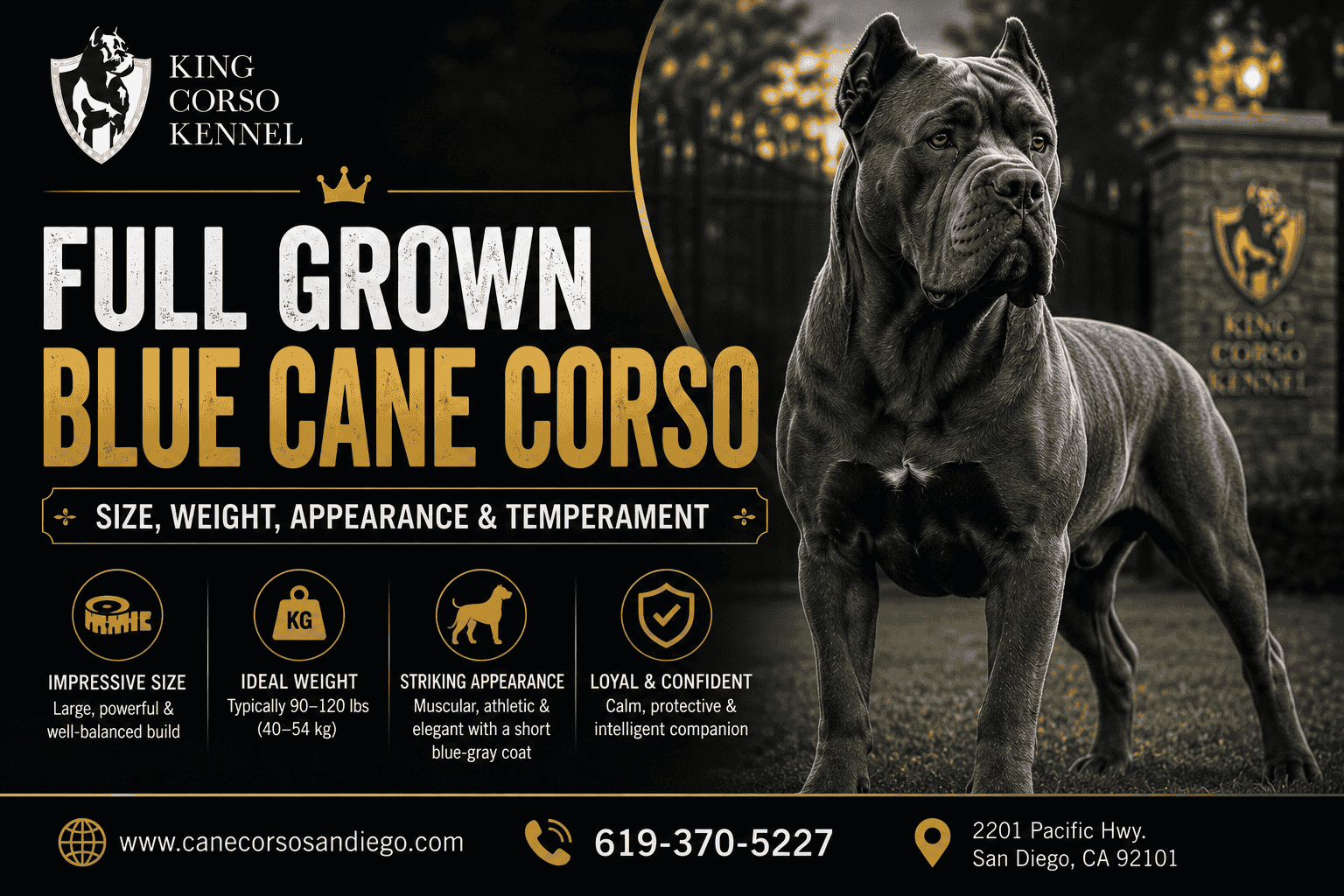

A dog’s protection value is not measured by size alone. It is measured in the moment a stranger approaches the gate, a child is behind you, or the household needs a calm, clear-headed guardian instead of a dog that reacts without direction. In the Cane Corso vs mastiff protection conversation, both can bring formidable presence and deep loyalty, but they protect in very different ways.
For families seeking a serious guardian that can also live closely with the people it loves, the decision deserves more than a glance at weight charts or dramatic photos. Breed tendencies matter. So do bloodline, early socialization, health, training, and the owner’s ability to lead a large, powerful dog responsibly.
Cane Corso vs Mastiff Protection: The Core Difference
The Cane Corso was developed as an athletic Italian working guardian. A well-bred Corso is typically watchful, discerning, physically capable, and highly connected to its family. Its protective instinct is often expressed through awareness and controlled response: noticing a change in its environment, placing itself between its family and uncertainty, and looking to its owner for direction.
“Mastiff” is a broader term, which is why comparisons can become misleading. English Mastiffs, Bullmastiffs, Neapolitan Mastiffs, and other mastiff-type breeds have distinct histories and temperaments. In general, many mastiffs are imposing home guardians with a more deliberate, less athletic style. Their sheer mass and deep bark can be a powerful deterrent before they need to do anything else.
The distinction is not that one breed protects and the other does not. It is how that protection tends to appear. A Cane Corso often brings more mobility, intensity, and handler responsiveness. A traditional mastiff may bring a quieter, heavier, more stationary form of deterrence. The best choice depends on the home, the owner, and what “protection” truly means for that family.
Presence Is Only the Beginning
An adult English Mastiff can outweigh a Cane Corso substantially, and its massive frame makes an immediate statement. For homeowners who want a calm dog whose appearance alone makes visitors pause, that presence is meaningful. A stable mastiff does not need to patrol a property to be noticed.
A Cane Corso is no small dog, either. A properly built male has commanding bone, muscle, and confidence, but he is usually more agile than the largest mastiff breeds. He can move with purpose across a home or acreage, remain engaged during structured training, and accompany an active owner more comfortably. That working-style athleticism is one reason the Corso has such strong appeal for families who want both an imposing guardian and a versatile companion.
Neither profile should be mistaken for a guarantee of protection. A very large dog with an unstable nerve base is not safer. A naturally reserved dog without socialization may become fearful rather than discerning. Real protection begins with a dog that is confident, environmentally sound, and secure enough to remain composed.
Deterrence versus true guardian ability
Deterrence is visual and audible. A large dog, a powerful head, a serious expression, and a bark at the door can make an unwelcome visitor reconsider. Both Corsos and mastiffs can offer this.
Guardian ability goes further. It requires the dog to read ordinary life without treating every delivery driver, guest, child on a skateboard, or neighbor near the fence as a threat. The dog must recover quickly from surprises, accept its owner’s guidance, and distinguish routine activity from genuine concern. This is where selective breeding and thoughtful upbringing become decisive.
Why the Cane Corso Often Suits Active Protection-Minded Homes
The Cane Corso is often the stronger fit for owners who want an involved, trainable guardian. This breed tends to form an exceptionally close bond with its family and wants a clear role within the home. With consistent leadership, the Corso can be deeply affectionate with its people while maintaining a naturally serious outlook toward unfamiliar situations.
That relationship is not passive. Corsos need structure. They benefit from daily exercise, obedience work, calm exposure to new places, and rules that every family member follows. A Corso that understands expectations is far more likely to channel its protective nature into steady behavior. A Corso left under-socialized, overconfined, or allowed to make every decision can become difficult for even an experienced owner.
For the right household, this is part of the appeal. The Corso is not simply a decorative guardian parked in the backyard. It is a powerful companion that thrives when included in family life, given purposeful training, and treated with the respect its intelligence demands.
Where a Mastiff May Be the Better Fit
A mastiff can be an outstanding choice for a household that values a slower-paced, gentle giant personality and has the space, budget, and physical capability to manage extraordinary size. Many mastiffs are famously devoted to their people and are content to stay close to home. Their watchful nature can be quiet rather than busy.
That slower pace can be an advantage for families who do not want a highly athletic guardian. It can also come with trade-offs. Giant breeds may be less suited to long hikes, sustained heat, frequent high-impact activity, or demanding training sessions. Their size makes routine management more consequential. A dog that weighs well over 150 pounds must be taught manners from puppyhood, because pulling, jumping, or refusing to move is not a minor inconvenience.
Health planning deserves serious attention as well. All giant and large guardian breeds require responsible screening, but the logistics and costs of giant-breed care can be especially significant. Feeding, orthopedic support, transportation, medication, and veterinary procedures all scale with the dog’s body size.
Temperament Is More Valuable Than Aggression
Families sometimes search for a “protective” puppy when what they really mean is a dog that will be loyal, alert, and brave if a situation becomes serious. That is a reasonable goal. It is not the same as seeking aggression.
A premium guardian prospect should not be bred for indiscriminate suspicion or encouraged to challenge every person it sees. The most trustworthy dogs are stable enough to welcome approved guests, settle around family activity, and respond when their owner says a situation is safe. They have confidence without chaos.
This is especially critical with Cane Corsos and mastiffs because their physical power leaves little room for careless breeding or casual ownership. Early puppy experiences matter greatly. Exposure should be positive and controlled, not overwhelming. Puppies should learn that new sounds, surfaces, people, and environments are normal, while also learning to look to their family for guidance.
Training Turns Instinct Into Reliability
No responsible breeder should promise that a puppy will become a finished protection dog. Genetics can create excellent potential, but the owner and trainer shape how that potential develops. Basic obedience is the nonnegotiable foundation: reliable recall, leash manners, place work, boundaries at doors, and calm behavior around visitors.
Professional training can be valuable, particularly for first-time Corso or mastiff owners. The goal should be control, clarity, and confidence, not making the dog look intimidating. Any advanced protection work should be considered carefully and handled only by qualified professionals who prioritize sound temperament, safety, and local legal requirements.
At home, the most effective practice is often simple. Reward calm neutrality. Do not praise frantic barking at every passing car. Teach the dog that you manage the front door, visitors, and boundaries. A guardian who trusts its owner does not need to live in a constant state of alert.
Choosing the Right Puppy and Breeder
Protection-minded buyers should ask direct questions before choosing either breed. Meet the parents when possible and observe more than appearance. Are they confident without being frantic? Are they manageable? Do they settle after excitement? How do they respond to unfamiliar people and new environments?
Health records, structural quality, and honest breeder guidance belong in the same conversation as pedigree. A powerful dog needs a body built to support its work and family life. Sound hips, elbows, cardiac health, responsible growth, and balanced structure all influence a dog’s long-term ability to move well and remain comfortable.
At King Corso Kennel, the focus is on pairing elite Cane Corso lineage with the stable temperament, early socialization, and personal care that a serious family guardian deserves. Champion bloodlines are meaningful, but the lasting value is a dog raised with the foundation to become a confident member of the home.
The right guardian should give your family peace of mind, not create daily tension. Choose the Cane Corso if you are ready for an athletic, deeply loyal working-style protector who wants direction and close involvement. Consider the mastiff if your lifestyle is better suited to a slower, monumental companion whose presence speaks first. Then give whichever dog you choose the training, boundaries, and belonging that turn natural instinct into lifelong trust.