
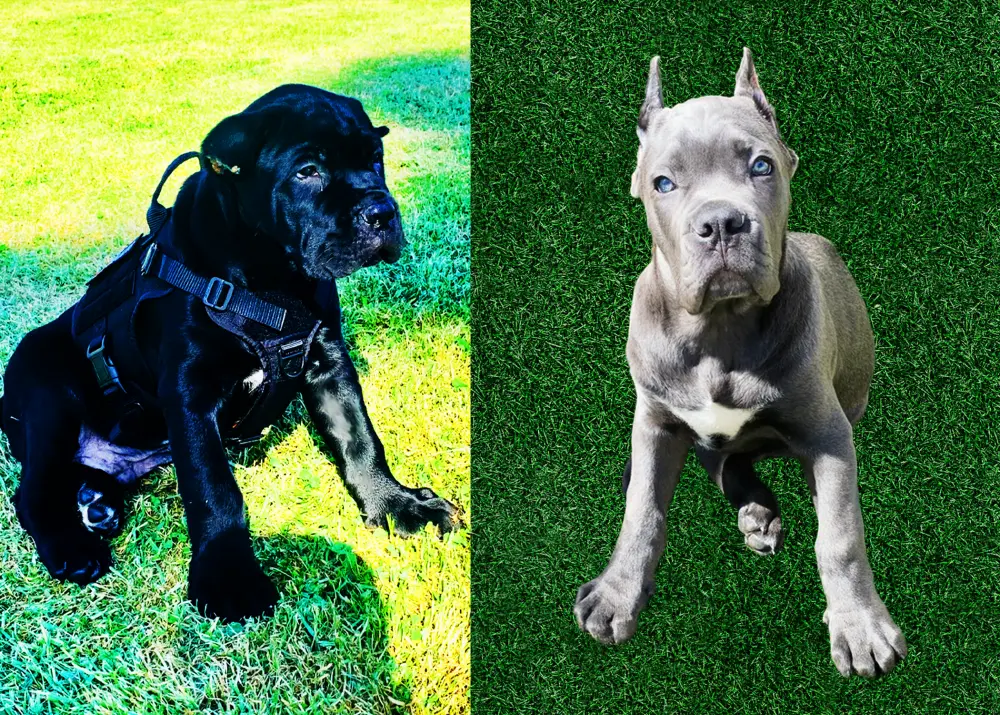
Training a Cane Corso is not optional, and it is not a one-time class. It is a plan that runs from the day your puppy comes home until your dog is a settled adult, with different priorities at each stage. This guide is written for first-time Corso owners. It is reviewed for 2027 and uses guidance from the AKC and veterinary behavior experts that is current as of November 2026.
Short answer: Socialize and teach basic manners from 8 weeks to 6 months, build reliable obedience and impulse control through adolescence (6 to 18 months), then keep skills sharp for life. Use reward-based methods, and get a qualified trainer involved early.
- A Cane Corso suits you if you’ll train daily in short sessions, stay consistent and enjoy having a dog with a job.
- Think twice if you want a dog that trains itself, or you can’t commit to classes through the teenage months.
Are Cane Corsos easy to train?
Cane Corsos are generally easy to train, according to the AKC, which calls them intelligent and eager to please. The same AKC page also says many Corsos can be dominant and protective, and describes them as assertive and willful, able to “end up owning an unwitting owner.” Both are true at once.
That’s why the AKC says that early socialization and puppy training classes are recommended for all dogs, but for a breed as big and strong as a Cane Corso, “they are a must.” Our article on Cane Corso intelligence looks at how they learn.
What training methods work best for a Cane Corso?
Reward-based training works best. The AKC’s Cane Corso breed page says that despite their appearance, Corsos “respond to love and rewards far better than to harsh corrections or training methods.” The American Veterinary Society of Animal Behavior (AVSAB) adds that positive, consistent training is associated with fewer behavioral problems and greater obedience than methods that involve punishment or encourage human dominance.
Rewards don’t mean permissiveness. Clear rules, consistent routines and calm leadership are part of reward-based training. You control the things your dog wants (food, walks, doors, play, attention) and give them for good choices. A dog that often weighs more than 100 pounds, as the AKC puts it, is easier to live with when it wants to work with you.
Your basic training kit
- A flat collar or well-fitted harness and a 6-foot leash.
- Small, soft treats, or part of the daily food ration (the AKC warns too many treats cause obesity).
- A crate and a mat or bed for settle training.
- Tough chew toys and a tug toy with rules.
- A treat pouch, so rewards are fast.
Stage 1: What should you train from 8 weeks to 6 months?
From 8 weeks to 6 months, focus on socialization, house training, handling and the first manners. This is the stage that shapes how your Corso sees the world.
Socialization comes first
The AVSAB says the first three months of life are the primary and most important time for socialization, the period when sociability outweighs fear. It also says behavioral problems are the number one cause of relinquishment to shelters. For this breed, the AKC says socialization helps ensure a Corso grows into a well-adjusted, well-mannered adult.
Each week, aim for safe, positive meetings with:
- People of different ages, sizes, voices and clothing (hats, sunglasses, uniforms).
- Calm, vaccinated adult dogs you know.
- Sounds: traffic, vacuums, thunderstorms on a speaker, kids playing.
- Surfaces: grass, gravel, tile, wood, metal grates.
- Handling: paws, ears, mouth, collar grabs, being lifted onto a scale.
- Places: car rides, a quiet store that allows dogs, the vet’s lobby for a treat and a leave.
The AVSAB says puppies can start socialization classes as early as 7 to 8 weeks, with at least one set of vaccines 7 days before the first class and a first deworming, and it advises avoiding dog parks while puppies are young. Our early socialization guide has more ideas.
First skills, in order
- Name response: say the name, reward the look.
- House training: outside after waking, eating and play, with a reward on the spot.
- Crate as a safe place: meals in the crate, short calm stays.
- Sit and down: lure with food, then fade the lure.
- Come: always worth it; never call your puppy to something unpleasant.
- Loose leash walking: stop when the leash goes tight, move when it’s loose.
- Leave it and drop it: trade for something better.
- Gentle mouth: play stops when teeth touch skin. See our bite inhibition guide.
Keep sessions short. The AKC suggests limiting leash-training sessions to five or ten minutes for puppies. Several short sessions a day beat one long one.
A first class: AKC S.T.A.R. Puppy
The AKC S.T.A.R. Puppy program is designed to get owners and puppies off to a good start; it involves attending a class for at least 6 weeks. It’s open to purebreds and mixed breeds. Ask local trainers whether they offer it, or choose any well-run puppy class that uses reward-based methods.
Stage 2: How do you train a Cane Corso through adolescence (6 to 18 months)?
Through adolescence, keep training consistent, raise the difficulty slowly and expect some backsliding. Your dog is bigger and stronger now, but not yet mature. The AKC says large and giant breeds may keep developing until 18 to 24 months, so your Corso is still growing up for this whole stage.
Priorities for 6 to 12 months
- Impulse control: wait at doors, wait for the food bowl, sit before greetings.
- Settle on a mat: a calm down while you eat or have visitors.
- Proofing: practice sit, down and come with more distractions and distance.
- Polite greetings: four paws on the floor, every time, with every person.
- Calm visitor routine: your dog goes to its mat or crate when the doorbell rings, and gets released when you decide.
The AKC says obedience training will keep a Cane Corso from “becoming the boss in the household.” Hold the rules you set at 3 months. If the couch was off-limits then, it stays off-limits now.
Priorities for 12 to 18 months
- Practice in real-world places: parking lots, outdoor patios that allow dogs, trailheads.
- Build a long, reliable down-stay.
- Practice handling a startle: a dropped tray, a skateboard rolling past, a stranger’s sudden approach. Reward calm.
- Start a structured activity: obedience, rally, tracking or scent work. The AKC says many Corsos compete in agility, obedience, dock diving, protection sport and tracking.
Mind the body as well as the brain. The AKC advises waiting until 12 to 18 months before jogging large breeds on leash and restricting repeated jumping in puppies. Hold off on agility jumps and dock diving until your vet says your dog’s growth is done. Our exercise guide has details by age.
Stage 3: What training does an adult Cane Corso need?
An adult Cane Corso needs regular practice, real exercise and a job. The AKC says the breed “was bred to work and is happiest when given a job to do,” and needs mental as well as physical stimulation, “or undesirable behavior will result.” It recommends a brisk walk or run of at least a mile in the morning and again in the evening.
Good adult routines include:
- Daily walks with a few minutes of obedience mixed in.
- A weekly activity: tracking, scent work, rally or obedience.
- Food puzzles and short trick sessions on rest days.
- Regular calm outings so manners stay fresh in public.
What is the AKC Canine Good Citizen test?
The AKC Canine Good Citizen (CGC) is a 10-skill test that teaches good manners to dogs and responsible ownership to their owners. It’s open to all dogs, purebred and mixed breed, and there are no age minimums or limits. It’s a practical goal for a Cane Corso because it tests the everyday manners that matter for a large dog in public.
Because there is no age minimum, you can try the CGC as soon as your dog can hold manners around distractions. Read the full requirements on the AKC’s CGC page and ask local trainers about prep classes and test dates.
How do you find a good dog trainer for a Cane Corso?
Look for a trainer who uses reward-based methods, has experience with large guardian breeds and can show you credentials and references. The Certification Council for Professional Dog Trainers (CCPDT), established in 2001, describes itself as the leading independent certifying organization for the dog training profession and says it develops rigorous exams for trainers. A certification isn’t everything, but it is one thing you can check.
Questions to ask any trainer:
- What methods and equipment do you use, and what do you do when a dog gets it wrong?
- How many large guardian breeds have you worked with?
- Can I watch a class before I sign up?
- Do you offer private sessions if we need help with a specific problem?
- What are your prices per session and per course?
Be wary of anyone who promises fast results through intimidation, or who tells you a Cane Corso must be “dominated.” That runs against both the AKC’s breed advice and the AVSAB’s position on training.
What about protection training?
Protection sport is one of the activities the AKC says Cane Corsos compete in, alongside agility, obedience and tracking. It is not where a family dog’s training starts. The AKC’s advice for the breed begins with socialization, puppy classes and obedience, and the CGC is a practical first goal. If you want to try protection sport after that, look for a trainer with a long record in the sport and ask the same questions you would ask any trainer. Our article on family protection dogs talks this through.
What are the most common Cane Corso training mistakes?
The mistakes to avoid are the ones the AKC and AVSAB guidance above warns about: starting late, being inconsistent and using harsh corrections. In practice that means:
- Waiting until the puppy is bigger. By then the socialization window has passed.
- Allowing puppy behavior you won’t want at 100 pounds, like jumping up, leaning on people or mouthing.
- Different rules from different family members. Agree on rules and cue words on day one.
- Too little exercise and mental work, which the AKC links to undesirable behavior.
- Too much hard exercise too young, which the AKC warns against for growing large breeds.
- Harsh corrections, which the AKC says Corsos respond to worse than rewards.
- Stopping training at 6 months, when the AKC says large breeds may keep developing until 18 to 24 months.
How does training work with children in the house?
Training with children works when adults manage every interaction and children follow simple rules. Kids can help with easy cues like sit and touch, with an adult beside them. Supervise young children and any large dog whenever they are together. Our guides on Cane Corsos and kids and introducing a Corso to children cover this step by step.
How does King Corso Kennel help with training?
Aston built our program on European bloodlines, emphasizing health, structure and temperament, after his first two Cane Corsos from a backyard breeder in 2014 suffered hip dysplasia and other joint and eye problems. He describes our sire Giulio Caesar as very lovable, very trainable and very obedient. You can meet our dogs on the Our Dogs page, and families can visit litters from around 4 weeks old and meet the parents, so you can see their temperament for yourself.
If you’re planning a 2027 puppy, our guides to reserving a puppy and the first year month by month pair with this plan. When you’re ready, see the puppies page or call (619) 370-5227.
Frequently asked questions
At what age should I start training my Cane Corso?
Start the day your puppy comes home. The AVSAB says the first three months are the most important socialization period, and puppy classes can begin at 7 to 8 weeks with at least one set of vaccines a week before. Begin with short sessions on name, house training, handling and sit. Waiting until your puppy is bigger means missing the window that matters most.
Is a Cane Corso a good dog for a first-time owner?
It can be, if the first-time owner is committed to classes, daily training and exercise. The AKC calls the breed generally easy to train but also assertive and willful, and says socialization and puppy classes are a must. Working with a qualified, reward-based trainer from the first weeks gives a first-time owner the help the AKC’s advice assumes.
Should I use a prong or shock collar on my Cane Corso?
The AKC and AVSAB guidance points the other way. The AKC says Cane Corsos respond to love and rewards far better than to harsh corrections, and the AVSAB says positive training is associated with fewer behavior problems than punishment-based methods. If you’re struggling with pulling or reactivity, work with a certified, reward-based trainer before reaching for aversive tools.
How long should Cane Corso training sessions be?
For puppies, keep sessions very short. The AKC suggests five to ten minutes for leash-training sessions, and several short sessions spread through the day work better than one long one. Adults can handle longer sessions, but end on a success while your dog is still keen. Weave practice into walks and meals so training becomes part of daily life.
Can a Cane Corso pass the Canine Good Citizen test?
Yes. The AKC Canine Good Citizen test is open to all dogs, purebred and mixed breed, with no age minimums or limits. It’s a 10-skill test of everyday manners, which suits a large guardian breed well. Ask local trainers about prep classes and test dates, and take the test once your dog can hold manners around strangers and other dogs.
Do Cane Corsos need protection training to guard?
No. The AKC says the breed’s name roughly translates from Latin as “bodyguard dog” and that many Cane Corsos can be dominant and protective. Its training advice for the breed is socialization, puppy classes and obedience, not protection work. Protection sport is one of several activities the AKC lists for Corsos; if you try it, do so after obedience is solid and with an experienced trainer.
What if my Cane Corso shows aggression?
Stop and get professional help rather than trying to fix it alone. Start with your vet to rule out a medical cause, then work with a qualified behavior professional. Manage the risk in the meantime with a leash, secure fencing and no unsupervised contact with visitors. The AVSAB says owners of puppies showing fear should seek veterinary guidance.