
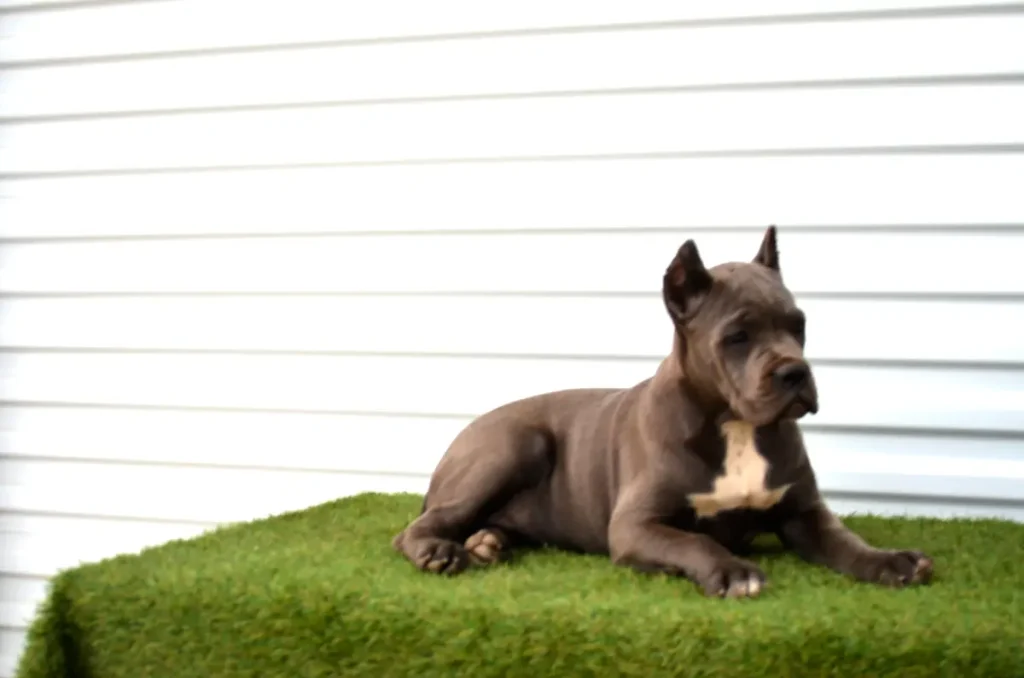
A Cane Corso’s first year moves fast. In twelve months a small, clumsy puppy turns into a powerful adolescent, and the habits you build in that time are the ones you live with for the next decade. This is a month-by-month plan for vaccines, socialization, feeding, exercise and training, based on veterinary and AKC guidance we could check. It is reviewed for 2027 with guidance current as of November 2026. Your own vet’s advice comes first for your puppy.
Short answer: Months 2 to 4 are for vaccines and safe socialization, months 4 to 6 for licensing, manners and routine, months 6 to 12 for steady obedience through adolescence. Throughout, keep exercise gentle, because the AKC says large breeds may keep developing until 18 to 24 months.
- Most important early: safe exposure to people, sounds and places in the first three months.
- Most important later: consistent, reward-based training as your puppy grows stronger.
What happens in a Cane Corso puppy’s first year?
In the first year your puppy completes its vaccine series, passes through the main socialization window, gets licensed, cuts down from four meals a day to two, and starts adolescence. It will also grow a great deal. Adult males stand 25 to 27.5 inches at the shoulder and females 23.5 to 26 inches, per the AKC, and the breed often weighs more than 100 pounds. We don’t publish month-by-month weight targets, because healthy puppies grow at different rates; your vet will track the curve. Our size and growth guide covers growth in more depth.
Here is the year at a glance:
| Age | Health | Feeding | Training and socialization |
|---|---|---|---|
| 6 to 12 weeks | Core vaccines start at 6 to 8 weeks; first deworming | Four meals a day | Primary socialization window; puppy class from 7 to 8 weeks |
| 3 to 4 months | Vaccines every 2 to 4 weeks; rabies per your vet | Drop from four to three meals sometime between 3 and 6 months | Keep socializing; house training; name, sit, leash |
| 4 to 6 months | Series ends after 16 weeks; license within 30 days of turning 4 months (SD Humane area) | Three meals | Manners, handling, short walks |
| 6 to 12 months | Discuss spay/neuter timing with your vet | Twice daily | Adolescent obedience; impulse control |
| 12 to 14 months | Booster within a year of the puppy series | Large breeds move to adult food around 12 to 14 months | Canine Good Citizen practice |
Sources: AAHA 2022 Canine Vaccination Guidelines; AVSAB puppy socialization position statement; AKC puppy feeding and growth articles; San Diego Humane Society licensing.
What vaccines does a Cane Corso puppy need?
A Cane Corso puppy needs the same core vaccines as every dog. The American Animal Hospital Association (AAHA) guidelines list distemper, adenovirus, parvovirus, leptospirosis and rabies as core. AAHA has since updated those 2022 guidelines to make leptospirosis a core vaccine.
For the puppy series, AAHA says vaccination can begin at 6 to 8 weeks and should repeat every 2 to 4 weeks until the puppy is older than 16 weeks. After the puppy series, a booster is given within one year, and then every three years for those vaccines. Rabies timing follows your vet’s protocol and local law.
Some vaccines are noncore, meaning your vet recommends them based on lifestyle and location. AAHA lists Bordetella (kennel cough), Lyme, canine influenza and the Western diamondback rattlesnake toxoid as noncore. If you hike with your dog in rural San Diego County, ask your vet whether the rattlesnake vaccine makes sense for you.
When is the socialization window for a Cane Corso puppy?
The most important socialization window is the first three months of life, according to the American Veterinary Society of Animal Behavior (AVSAB). During that time, sociability outweighs fear, so puppies adapt to new people, animals and experiences more easily than they will later.
The AVSAB is blunt about why this matters. It says behavioral problems are the number one cause of relinquishment to shelters, and that behavioral issues, not infectious diseases, are the number one cause of death for dogs under three years of age. The AKC says many Cane Corsos can be dominant and protective, and that socialization helps them grow into well-adjusted, well-mannered adults.
How to socialize safely before vaccines are finished
The AVSAB position is that puppies should get socialization before they are fully vaccinated, done carefully:
- Puppy classes can start as early as 7 to 8 weeks, with at least one set of vaccines 7 days before the first class and a first deworming.
- Avoid dog parks and other areas used by dogs of unknown vaccination status.
Within those limits, these are everyday ways to give a puppy new experiences. Run them past your vet first:
- Invite vaccinated, friendly adult dogs and calm visitors to your home.
- Carry your puppy to new places so it can watch traffic, crowds and noise from your arms.
- Let it walk on different safe surfaces at home: grass, tile, wood, a ramp.
- Handle paws, ears and mouth daily so vet visits are easy later.
The AVSAB also says socialization should continue after the first three months. Keep going all year. Our early socialization guide has a fuller checklist.
How much should a Cane Corso puppy eat?
Feed the amount on your puppy food’s label for your puppy’s age and expected adult weight, then let your vet adjust it at each visit. We don’t give a cups-per-day figure because foods differ in calories. What we can give you is the AKC’s meal schedule:
- 6 to 12 weeks: four meals a day.
- 3 to 6 months: drop from four to three meals sometime in this period.
- 6 to 12 months: twice daily.
- 12 to 14 months: the AKC says larger breeds switch to adult food at 12, 13, or even 14 months.
Keep your puppy lean. The AKC notes some Cane Corsos are prone to getting overweight and warns that too many treats cause obesity. Use pieces of the daily food ration as training rewards. Ask your vet about the signs of bloat; the AKC says large, deep-chested breeds are susceptible to it. Our puppy food guide covers choosing a large-breed puppy formula.
How much exercise does a Cane Corso puppy need?
Less than you might think, and gentler. The AKC suggests puppy walks of about five minutes per month of age, once or twice a day. A 4-month-old puppy, by that rule, gets about 20-minute walks. The AKC says grass and packed sand are the best surfaces to start on.
Avoid these during the first year:
- Jogging or road work. The AKC says large breeds should wait until 12 to 18 months before jogging on leash, and a veterinarian quoted by the AKC says road work isn’t recommended before 14 to 18 months.
- Repeated jumping. The AKC advises restricting repeated jumping exercises, which can injure a puppy’s back.
- Running on hard surfaces. The AKC warns against puppies running on hard surfaces such as sidewalks or blacktop.
The reason is growth. The AKC says large and giant breeds may continue developing until 18 to 24 months. An adult Cane Corso needs a lot of exercise; the AKC suggests at least a mile morning and evening. Build up to that slowly. Our Cane Corso exercise guide covers each age.
On hot San Diego days, walk early or late. Our hot weather guide covers heat safety for the breed.
Month-by-month: the Cane Corso puppy’s first year
Here is what to focus on at each stage. Go-home age varies by breeder, so ask yours; this plan starts at 8 weeks.
Weeks 8 to 12: settling in
- Vet visit within the first few days; continue the vaccine series.
- Crate training: short, pleasant sessions, with the crate as a safe den. The AVSAB notes crate-trained puppies are less stressed when they must be confined later.
- House training on a strict schedule: after sleep, after meals, after play.
- Start a puppy class if your vet agrees and the AVSAB vaccine guidance is met.
- Daily handling of paws, ears, mouth and collar.
- Meet many calm people of different ages and looks.
Months 3 to 4: the busiest learning period
- Vaccines continue every 2 to 4 weeks.
- Teach name, sit, down, come and loose leash walking in short sessions. The AKC suggests limiting leash-training sessions to five or 10 minutes.
- Teach “drop it” and “leave it.” A big dog’s mouth needs manners early. Read our bite inhibition guide.
- Move from four meals to three when your vet agrees.
- The socialization window is closing; keep up new, positive experiences every day.
Months 4 to 6: licensing and routine
- The puppy series finishes once your puppy is older than 16 weeks.
- License your dog. In the San Diego Humane Society’s area, dogs must be licensed within 30 days of turning four months, with a rabies certificate. A one-year license is $20 for an altered dog or $60 for an unaltered dog.
- Start car rides to pleasant places, not just the vet.
- Practice calm greetings: four paws on the floor before anyone says hello.
- Offer tough chew toys and swap them for anything off-limits, every time.
Months 6 to 9: adolescence begins
- Switch to two meals a day.
- Expect testing of rules. Stay consistent; the AKC says obedience training keeps a Cane Corso from becoming the boss in the household.
- Enroll in an adolescent or basic obedience class.
- Talk to your vet about spay or neuter timing for your dog.
- Keep exercise moderate. No jogging yet.
Months 9 to 12: building a reliable dog
- Practice obedience in busier places: parking lots, outdoor shops that allow dogs, quiet trail heads.
- Work on a long down-stay and calm behavior when visitors arrive.
- Start practicing the skills in the AKC Canine Good Citizen test, a 10-skill test with no age minimum.
- Book the booster your vet recommends within a year of the puppy series.
Months 12 to 14: the transition
- Move to adult food when your vet agrees; the AKC puts large breeds at 12 to 14 months.
- Slowly lengthen walks, but wait for your vet’s go-ahead before jogging.
- Ask your vet whether preliminary hip X-rays make sense. The OFA offers preliminary hip screenings for dogs between 4 and 23 months.
When do Cane Corsos stop growing?
Large and giant breeds may continue developing until 18 to 24 months, according to the AKC. So your Cane Corso’s first birthday is not the end of growing up. The AKC’s chief veterinarian explains that a puppy’s growth plates harden gradually as it matures. Keep the growth-plate cautions on exercise until your vet tells you otherwise.
What should you train first?
Train the things that keep a big dog safe and pleasant to live with: coming when called, walking on a loose leash, settling on a mat, and accepting handling. Fancy tricks can wait. The AKC says Cane Corsos are intelligent and eager to please, and respond to love and rewards far better than to harsh corrections. The AVSAB adds that positive, consistent training is linked to fewer behavior problems than methods based on punishment or dominance. Our 2027 training plan lays out each stage in detail.
How do our puppies start life at King Corso Kennel?
King Corso Kennel is a family program on an 80-acre ranch in Jamul. Families can visit the litter from around 4 weeks old and meet the parents. Every breeding dog with published scores is hip and elbow scored HD-A / ED-0, which you can see on our health testing page. Aston built the program after his first two Cane Corsos, bought from a backyard breeder in 2014, developed hip dysplasia, cherry eye and knee problems. Health screening of the parents is the part of the first year that happens before you meet your puppy. Ask us about upcoming litters on the puppies page or get in touch.
Frequently asked questions
When can my Cane Corso puppy go outside?
Ask your vet, because the answer depends on local disease risk and where your puppy is in its vaccine series. The AVSAB recommends socialization before vaccines are complete but says to avoid dog parks and areas used by dogs of unknown vaccination status. Carry your puppy in public, attend clean puppy classes, and invite vaccinated dogs over instead.
Are dog parks safe for a young Cane Corso?
Not while the vaccine series is unfinished. The AVSAB says to avoid dog parks and other areas used by dogs of unknown vaccination or disease status during early socialization, and the AAHA puppy series runs until a puppy is older than 16 weeks. After that, ask your vet when your puppy is protected. Planned play with known, vaccinated, friendly dogs is an alternative to a park.
How often should a Cane Corso puppy see the vet in the first year?
Expect a visit every 2 to 4 weeks during the puppy vaccine series, which the AAHA says runs until the puppy is older than 16 weeks. After that, visits drop to wellness checks your vet schedules, plus a booster within a year of the series. Add visits for spay or neuter, and any time something seems off, especially signs of bloat.
Is it normal for a Cane Corso puppy to be clumsy?
Often, yes. Big puppies can look gangly while they grow, and the AKC says large breeds may keep developing until 18 to 24 months. That’s one reason the AKC advises against repeated jumping and jogging for large-breed puppies. Clumsiness is different from limping, reluctance to get up, or pain after rest, which deserve a vet visit. Hip dysplasia is one condition breeders screen Cane Corsos for, per the AKC.
Can I leave my Cane Corso puppy alone during the workday?
Not for a full workday at first. Young puppies need frequent potty breaks, meals and company. Plan for a midday visit from a family member, neighbor or dog walker. Build alone time slowly with crate training and a stuffed chew toy. The AVSAB says time alone with favorite toys may help prevent over-attachment, so short, regular practice sessions help.
Do Cane Corso puppies need a special large-breed food?
Ask your vet whether a large-breed puppy formula suits your puppy, then follow the label’s feeding guide and let your vet adjust the amount as your puppy grows. The AKC says large-breed puppies should be eating unmoistened dry puppy food by 9 or 10 weeks, and that larger breeds switch to adult food at 12, 13 or even 14 months.
When should I start training my Cane Corso puppy?
Start the day your puppy comes home. Short sessions of five to ten minutes, as the AKC suggests for leash training, work best for young puppies. Begin with name, sit, house training and gentle handling. The AVSAB says puppy classes can begin at 7 to 8 weeks with at least one set of vaccines a week before. The AKC says Corsos respond to love and rewards far better than to harsh corrections.