
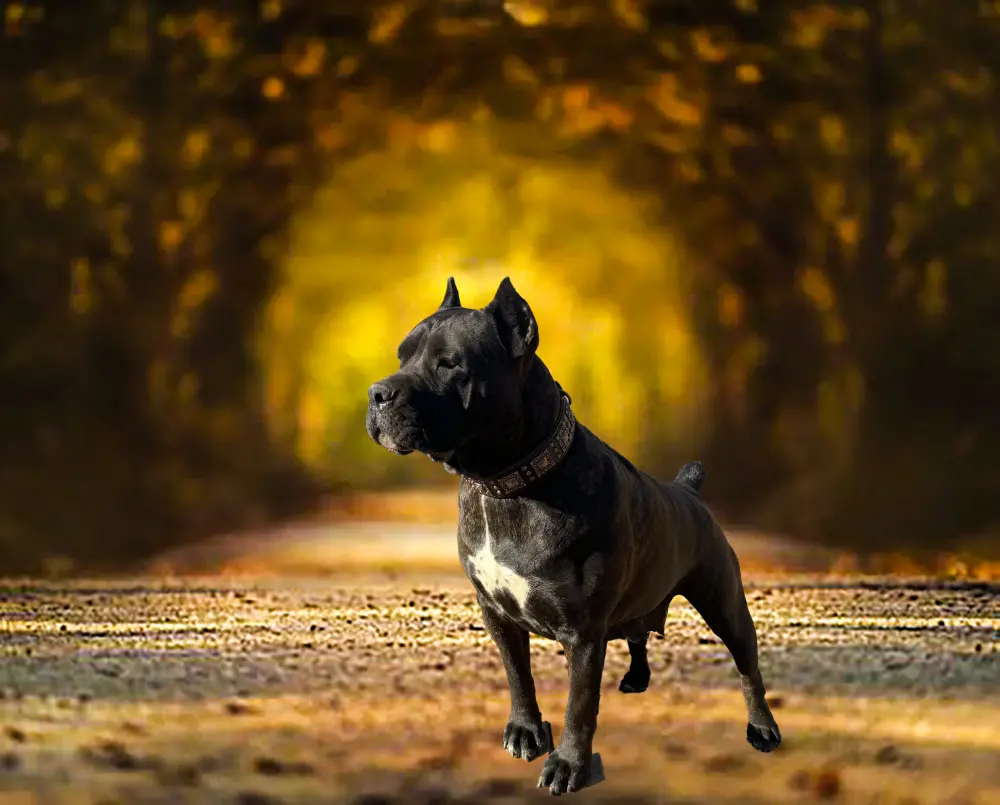
A healthy Cane Corso can live comfortably in a hot climate, including inland San Diego County, but it cannot be treated like a dog that shrugs off heat. It is a big, heavy, muscular dog that cools itself mainly by panting. In summer that means early walks, shade all day, cool water and no hot cars.
We raise our dogs on a ranch in Jamul, inland from the coast, where summer afternoons are a lot warmer than they are at the beach. This guide uses NOAA climate normals for our part of the county, veterinary guidance on heatstroke, and the County’s own summer rules.
Can a Cane Corso handle hot weather?
Yes, with management. A Cane Corso’s short coat helps in warm weather, but a dog this big and muscular can still overheat during exercise or in direct sun.
Three things about the breed shape how it handles heat:
- Size. The AKC describes Corsos as “nearly 28 inches at the shoulder and often weighing more than 100 pounds.” That is a lot of dog to keep cool.
- Coat. The FCI standard calls the coat “short, shiny, very dense with a slight undercoat.” The AKC notes that the undercoat “varies in length depending on the climate the dog lives in.” So a Corso living somewhere warm may carry a shorter undercoat, but it still has one.
- Cooling. Dogs do not sweat the way we do. VCA Animal Hospitals says panting “is their primary way of regulating body temperature.” VCA adds that dogs with a restricted airway are at greater risk, and that excited or heavily exercised dogs can be at risk even when the temperature and humidity do not seem high.
The FCI standard describes the muzzle as “noticeably shorter than the skull, ratio muzzle: skull approximately 1 : 2.” The Corso is not among the flat-faced breeds VCA names as higher risk (pugs, boxers and bulldogs), but it is not a long-muzzled dog either. If your dog snores heavily or struggles to catch its breath after mild effort, mention it to your vet.
How hot does it get in inland San Diego County?
Hotter than most people expect. NOAA’s 1991–2020 climate normals show El Cajon averaging about 57 days a year at 90°F or above, compared with about 3 days a year at San Diego’s Lindbergh Field.
There is no NOAA normals station in Jamul itself, so the table uses the closest inland stations, El Cajon and Alpine, alongside the coast for contrast.
| El Cajon | Alpine | San Diego (Lindbergh Field) | |
|---|---|---|---|
| Average high, July | 86.1°F | 86.7°F | 75.3°F |
| Average high, August | 88.6°F | 88.9°F | 77.3°F |
| Average high, September | 87.3°F | 85.9°F | 77.2°F |
| Average low, August | 64.7°F | 62.2°F | 67.5°F |
| Days at 90°F or more, per year | 56.8 | 55.0 | 3.0 |
| Days at 100°F or more, per year | 6.9 | 4.2 | 0.1 |
| Days at 90°F or more, August | 15.1 | 16.8 | 0.3 |
Sources: NOAA NCEI 1991–2020 monthly climate normals for stations USC00042706 (El Cajon), USC00040136 (Alpine) and USW00023188 (San Diego Lindbergh Field); annual day counts from the NCEI annual normals.
Two things stand out. First, September is still a hot month inland, so “summer rules” for your dog should run well past Labor Day. El Cajon averages 13.5 days of 90°F or more in September alone. Second, nights cool off. August lows in the low to mid 60s inland give you a comfortable window for exercise early in the morning.
If you live near the coast, your Corso will rarely face these numbers. If you live inland, in places like El Cajon, Alpine or Jamul, plan for them.
What temperature is too hot for a Cane Corso?
There is no single safe air temperature. What matters is how hot the dog’s body gets, and that depends on effort, sun, humidity, weight and fitness as much as on the thermometer.
VCA says that if a pet’s body temperature “exceeds 103°F (39.4°C), it is considered abnormal or hyperthermic,” and that body temperatures above 106°F without previous signs of illness “are most commonly associated with exposure to excessive external or environmental heat.” In practice, a Corso running hard in full sun can overheat on a day that feels pleasant to you, while the same dog lying on a cool floor indoors can stay comfortable through a hot afternoon.
Rules of thumb we give families instead of a magic number:
- If you would not jog in it, your Corso should not either.
- If it is hot enough that you are looking for shade, your dog needed shade 10 minutes ago.
- Puppies, seniors and overweight dogs deserve extra caution. Ask your vet about your own dog.
- A dog that is excited (guarding a fence line, playing with another dog) will not stop on its own. You have to stop it.
What are the signs of heatstroke in a Cane Corso?
Watch for heavy panting and excessive drooling. Veterinary sources also list dry or sticky gums, an abnormal gum color, lethargy, disorientation and seizures.
The County of San Diego’s summer safety page says the signs of heat stress in dogs include “panting and excessive drooling.” VCA lists signs of heat stroke that include “elevated breathing rates, dry or sticky gums, abnormal gum color, bruising in the gums, lethargy, disorientation, and seizures.”
One breed-specific trap: Corsos drool a fair amount anyway. The AKC rates the breed 3 out of 5 for drooling. Learn what your dog’s normal looks like on a cool day, so you can tell when the drool, panting or gum color changes.
Watch for these too:
- refusing to lie down, or lying down and not wanting to get up;
- stumbling, seeming confused, or not responding to their name, which is what disorientation looks like in practice.
Treat any sign on VCA’s list as an emergency. Start cooling and drive to a vet.
What should you do if your Cane Corso overheats?
Move the dog into shade, cool it with cool (not cold) water, and get it to a veterinarian right away, even if it seems to recover.
VCA says “Cool water (not cold) may be poured over the head, stomach, armpits and feet,” and that “Ice packs and rubbing alcohol are no longer recommended as a method to promote temperature reduction.” The County also advises moving your pet into the shade, letting it drink small amounts of cool water, and taking it “directly to a veterinarian; it could save your pet’s life.”
You may still see older advice, including on some government pages, to put ice packs on the head and neck. Current veterinary guidance from VCA has moved away from ice. If your vet tells you something different for your dog, follow your vet.
A practical step for summer: save the number and address of your nearest 24-hour emergency vet in your phone now, and know how you would get a 100-pound dog into your car if it could not jump in.
When is the best time to walk a Cane Corso in summer?
Early morning. The County advises: “If you exercise with your dog, do so only in the early morning when the temperature is lower.”
Inland, that usually means finishing your walk before the sun is well up. Late evening can work too, but pavement and rock hold heat after sunset, so test the ground first.
Two more timing rules:
- Do not exercise right after a meal. The AKC says the best time to walk a puppy or adult dog “is at least an hour after a meal.” The American College of Veterinary Surgeons links a deep chest with a higher risk of bloat (GDV), a condition that is “commonly associated with rapid ingestion of large meals.”
- Skip the hard workout on the hottest days. The County puts it bluntly: “Sometimes it is better to leave your dog at home.” A day of short sniff walks and a puzzle feeder will not hurt a Corso. Heatstroke can.
Our Cane Corso exercise guide covers how much exercise the breed needs at each age.
Is hot pavement dangerous for a Cane Corso’s paws?
Yes. Asphalt, concrete, metal plates and dark rock can be far hotter than the air in summer, and paw pads can burn.
The County’s test is simple: “Don’t take your dogs for walks on the hot pavement. If it is too hot for you to walk barefooted, then don’t make your dogs do it either.” In practice:
- walk on grass, dirt paths or shaded sidewalks;
- avoid parking lots, asphalt trails and truck beds in the afternoon;
- check pads after walks for redness, blisters or limping.
Can you leave a Cane Corso in the car in summer?
No. In San Diego summers a parked car becomes dangerous quickly, and California law prohibits leaving an animal in a vehicle under conditions that endanger it.
The County warns that “Even with a window open, the inside of our cars can reach 120 degrees in a matter of minutes.” Penal Code 597.7 bans leaving an animal in an unattended vehicle when heat, lack of ventilation or lack of water could reasonably be expected to cause suffering, disability or death. If you are running errands on a hot day, leave the dog at home. Our article on California laws for Cane Corso owners covers the penalties.
How do you keep a Cane Corso cool at home?
Keep the dog indoors during the hottest hours, give it shade that lasts all day, and make sure cool water is always available.
The County’s summer list is a good checklist for a Corso:
- “Keep your pets indoors when the temperatures soar.”
- Keep water “in a tip-proof container, always topped off,” and keep it cool. Pets will not drink water that is too hot.
- “Consider a misting system to keep your outdoor areas cooler.”
- “Be sure your pet has shade ALL DAY. Remember the sun’s position moves throughout the day.”
- “Consider adding a children’s wading pool for your dog.”
From our side, we add a few things for this breed. A Corso will often choose to lie on a cool tile or concrete floor in the shade, so give it that option. Large water bowls in more than one spot help, because one tipped bowl can mean hours without water. And keep an eye on weight. The AKC notes that “Some dogs are prone to getting overweight,” so ask your vet what a healthy weight looks like for your dog.
Do black Cane Corsos get hotter than blue or fawn ones?
In direct sun, a dark coat absorbs more light and warms faster than a pale one. We have not found a published study measuring this in Cane Corsos, so we will not put a number on it.
What we can say is that activity and sun exposure matter more than color. A black Corso resting in shade is better off than a fawn Corso running hard in full sun. Plan around activity and sun exposure, not coat color. If you are choosing a color, our pages on blue Cane Corsos and black brindle Corsos cover the colors themselves.
Are Cane Corso puppies more at risk in the heat?
Puppies need closer watching. A puppy at play is not thinking about the heat, so you have to do it for them.
For a summer puppy, keep play sessions short, in the shade or indoors, and end them before the puppy is panting hard. The AKC suggests puppy walks of “about five minutes multiplied by every month of their age, once or twice a day,” and those minutes should come in the cool part of the day. Older dogs, overweight dogs and any dog with heart or breathing issues need the same extra care. Ask your vet whether your dog has any condition that changes its heat limits.
How do we help families with a summer puppy?
Ask us about it when you visit. We live with inland summers ourselves and are glad to talk through heat for your home.
Our ranch is in Jamul, so we see inland summers firsthand. When families visit the litter, which they can do from around 4 weeks old, we are happy to talk through shade, water and walk timing for their own yard and neighborhood. Good health starts earlier than summer care, though. Aston built King Corso Kennel after his first two Corsos, bought from a backyard breeder, developed hip dysplasia and other joint problems. That is why the hip and elbow scores we publish for our breeding dogs (HD-A / ED-0) are on our health testing page. A dog with sound joints is easier to keep active and lean.
If you are planning a puppy for the warm months, see our current puppies or call us at (619) 370-5227.
Frequently asked questions
Can a Cane Corso live outside in San Diego in summer?
A Corso can spend time outdoors, but it should not be left outside all day in inland summer heat. The County advises keeping pets indoors when temperatures soar and providing shade all day. NOAA normals show El Cajon averaging about 57 days a year at 90°F or more. Bring your dog inside during the hottest hours, with water available.
Is a Cane Corso a good breed for hot climates?
It can be, if the owner manages heat well. The short, dense coat helps, and the AKC notes the undercoat varies with climate. But the breed’s size and muscle make overheating a risk during exercise. A Corso in a hot area needs an owner who walks early, gives constant shade and water, and watches the dog’s weight.
Should I shave my Cane Corso in summer?
There is no need. A Corso’s coat is already short, and we found no veterinary source recommending it for the breed. Brushing is the better tool. The AKC recommends weekly brushing, daily during shedding season, which removes dead hair before it builds up. If you think your dog’s coat is unusually thick or patchy, ask your vet.
How much water does a Cane Corso need on a hot day?
More than usual, and always available. We could not find a vet-published fixed amount for the breed, so the safest rule is constant access. The County advises a tip-proof container that is always topped off and kept cool, since pets will not drink water that is too hot. Put bowls in more than one shaded spot.
Can a Cane Corso get heatstroke on a cloudy or mild day?
Yes. Heatstroke depends on the dog’s body temperature, not only the forecast. VCA calls a body temperature above 103°F abnormal. A Corso playing hard, chasing a fence line or running with another dog can reach that on a mild day. Watch for heavy panting, excessive drooling and slowing down, and stop activity early.
Are cooling vests and cooling mats worth it for a Cane Corso?
They can be useful extras, but we have not found veterinary research on them for this breed, so we would not rely on them. A cooling mat gives a resting dog a cool surface, which many Corsos seek out on their own. Neither a mat nor a vest makes a midday hike safe in August. Use them alongside shade, water and early-morning exercise, not instead of them.
Can my Cane Corso swim to cool off?
Some Corsos enjoy water, and the AKC lists dock diving among sports the breed competes in. A children’s wading pool, which the County suggests, is a simple way to cool off at home. Supervise swimming, introduce water slowly, and do not assume a heavy, muscular dog is a strong swimmer. A dog life jacket is sensible in open water.