A Cane Corso puppy can go from a solid, confident 20-pound youngster to a commanding adult guardian in what feels like a single season. That fast transformation is exactly why a reliable Cane Corso size growth guide matters. Families bringing home this exceptional breed need more than a target number on a scale. They need to understand what healthy development looks like, how to support growing joints and bones, and why a stable temperament matters as much as impressive size.
A well-bred Cane Corso should mature into a powerful, athletic family protector – not an overfed puppy carrying unnecessary weight or a dog pushed into adult-level exercise too soon. Size is part of the breed’s unmistakable presence, but structure, sound movement, health, and character are the foundation beneath it.
Cane Corso Size Growth Guide by Age
Cane Corsos are a giant working breed, and they develop over a long timeline. Most of the dramatic height and weight gain occurs during the first year, yet many dogs continue filling out through 18 to 24 months. Some especially substantial males may not reach their mature chest, head, and overall muscle until closer to age three.
Every puppy is an individual. Genetics, sex, nutrition, activity level, litter size, and overall health all influence growth. A puppy from a strong, large-framed pedigree may develop differently from a puppy with a more moderate build. The goal is never to make a young dog grow as quickly as possible. The goal is steady, controlled development that protects the body built to carry that adult size.
Birth to 8 Weeks: The Breeder’s Foundation
A Cane Corso’s future begins well before pickup day. During the first eight weeks, responsible breeding, maternal care, nutrition, clean living conditions, and early human interaction shape the foundation for a confident puppy.
At this age, weight changes quickly, but it is not useful for buyers to compare one litter too closely with another. A smaller puppy is not automatically less promising, and the biggest puppy is not automatically the best adult prospect. Correct proportions, sound movement, a willing temperament, and a thoughtful breeding program matter far more than a single early weigh-in.
2 to 4 Months: Fast Growth and Early Training
Most Cane Corso puppies arrive in their new homes around eight weeks old, often weighing roughly 20 to 30 pounds depending on sex and lineage. By four months, many will reach approximately 45 to 65 pounds.
This is a critical period for socialization and household structure. Your puppy is growing quickly but still has a young mind and developing joints. Use short training sessions, calm introductions to new people and environments, and controlled play. Avoid repetitive impact activities such as long runs, high jumping, or chasing a ball until exhaustion.
4 to 6 Months: The Awkward Growth Stage
Between four and six months, many Cane Corsos look temporarily unbalanced. Legs may lengthen before the chest fills out, ears and paws can seem oversized, and growth may occur in sudden spurts. This is normal for a breed designed to become large, athletic, and imposing.
A typical puppy may weigh around 65 to 85 pounds at six months, though some females may be lighter and some substantial males may be heavier. Focus on body condition rather than chasing a chart. You should be able to feel the ribs beneath a light layer of flesh, see a visible waist from above, and notice a tucked abdomen from the side.
6 to 12 Months: Strength Begins to Show
From six months through the first birthday, your Cane Corso will become noticeably more powerful. Many females reach roughly 80 to 100 pounds by 12 months, while males may fall around 95 to 120 pounds or more. Height can approach the adult range during this period, but the dog is still maturing.
This is also when consistent obedience becomes non-negotiable. A large adolescent Corso who has not learned leash manners, place commands, recall, and respectful boundaries can be difficult to manage. The same confidence that makes this breed a remarkable protector must be guided with calm, experienced leadership.
12 to 24 Months: Adult Frame, Mature Presence
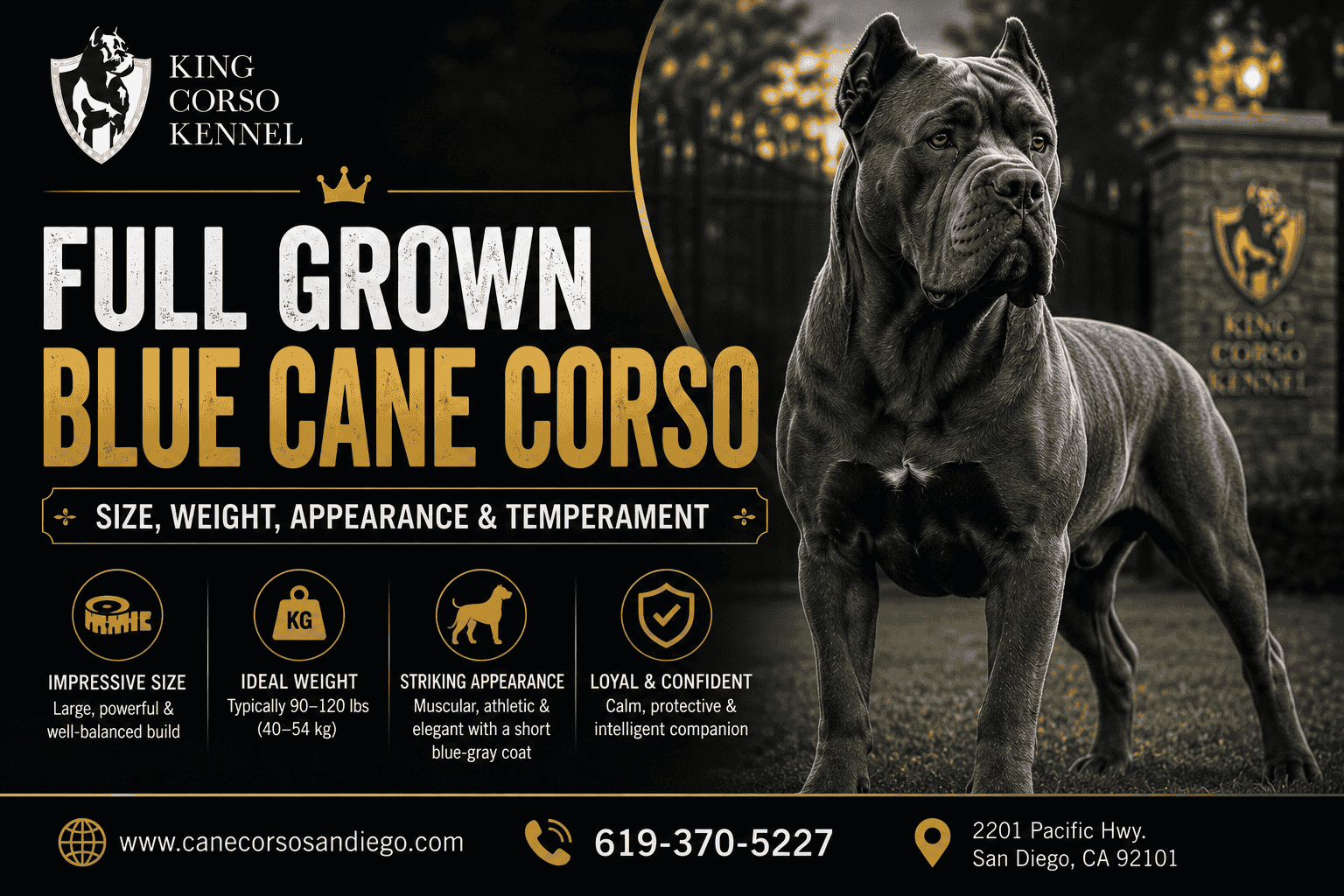
The American Kennel Club breed standard places adult females at approximately 23.5 to 26 inches at the shoulder and males at approximately 25 to 27.5 inches. Weight should remain proportionate to height and build. Many healthy adult females fall around 85 to 110 pounds, while males commonly range from 100 to 130 pounds, with some dogs from notably large bloodlines exceeding those figures without being out of condition.
A bigger number is not automatically better. An elite Cane Corso should look powerful without appearing soft, heavy, or strained. The ideal dog carries substantial bone and muscle while retaining the movement, endurance, and physical soundness expected of a serious working-style guardian.
What Healthy Cane Corso Growth Should Look Like
Healthy growth is steady rather than frantic. Your puppy should be energetic, interested in food, comfortable in movement, and gradually more coordinated as the months pass. Brief awkward stages are expected. Persistent limping, reluctance to rise, dramatic fatigue, diarrhea, frequent vomiting, or a sudden shift in appetite deserves a prompt conversation with your veterinarian.
Do not judge progress from weight alone. A 90-pound puppy with excess body fat is not healthier than an 80-pound puppy with a correct waistline and strong muscle tone. Extra weight places added stress on growing hips, elbows, knees, and soft tissue. For a large guardian breed, keeping a youngster lean is one of the most practical ways to support long-term mobility.
Your veterinarian can help monitor body condition at routine visits. Your breeder can also provide perspective on the puppy’s family pattern, including the size and development of parents and prior offspring. That context is more valuable than an anonymous online chart.
Feeding a Growing Cane Corso Without Overdoing It
Choose a complete diet formulated for large-breed puppies and feed according to your puppy’s age, condition, and veterinarian’s guidance. Large-breed puppy formulas are designed to support controlled skeletal development, including appropriate mineral balance. Switching too early to adult food or adding unneeded supplements can create problems rather than improve growth.
Feed measured meals instead of leaving food available all day. Young puppies commonly do well with three meals daily, transitioning to two meals as they mature. Adjust portions based on body condition, not just the feeding bag. Energy needs can change quickly during a growth spurt, after a change in activity, or following spay or neuter procedures.
Avoid using extra calcium, high-calorie toppers, or performance supplements simply to create a larger dog. A Cane Corso’s mature potential is written primarily in genetics. Thoughtful feeding helps that potential develop correctly; excessive feeding cannot improve it.
Fresh water should always be available, and high-value treats should be counted as part of the day’s intake. Because this is a deep-chested breed, avoid vigorous activity immediately before and after large meals. Ask your veterinarian about the best feeding and exercise routine for your individual dog.
Exercise That Builds Confidence Without Stressing Joints
A growing Cane Corso needs daily movement, but the right kind of movement changes with age. Leash walks, free play on safe footing, gentle exploration, basic obedience, and mentally engaging games provide an excellent foundation. Puppies also need substantial rest. Sleep is part of growth.
Until the body matures, skip forced-distance running, repetitive jumping, intense stair sessions, and high-impact agility work. These activities can place too much strain on a rapidly developing body. Controlled training is not about limiting your dog’s potential. It is about preserving it.
Mental work is equally valuable for this intelligent, observant breed. A Cane Corso that learns neutrality around visitors, confidence in new settings, and calm responsiveness to its family is being prepared for its true role: a devoted companion with the discernment to protect without becoming unstable or reactive.
Why Bloodline and Early Care Matter
Adult size is never an accident. It reflects generations of breeding choices, including frame, bone, structure, health history, movement, and temperament. Reputable breeders do not select solely for the largest possible dog. They seek dogs that carry their size with balance, physical integrity, and the stable confidence that makes the Cane Corso worthy of its reputation.
At King Corso Kennel, puppies are raised with the space, early care, and human connection this extraordinary breed deserves. For families seeking a premium Cane Corso, the value of a carefully planned pedigree extends beyond an impressive adult silhouette. It offers confidence in the dog’s foundation as a loyal companion, capable guardian, and cherished member of the home.
When you watch your puppy grow, resist the urge to measure success only in pounds. Raise the dog in front of you with measured nutrition, patient training, excellent veterinary care, and clear leadership. Given time to mature correctly, a Cane Corso can develop the powerful presence and deeply loyal heart that make the breed unforgettable.