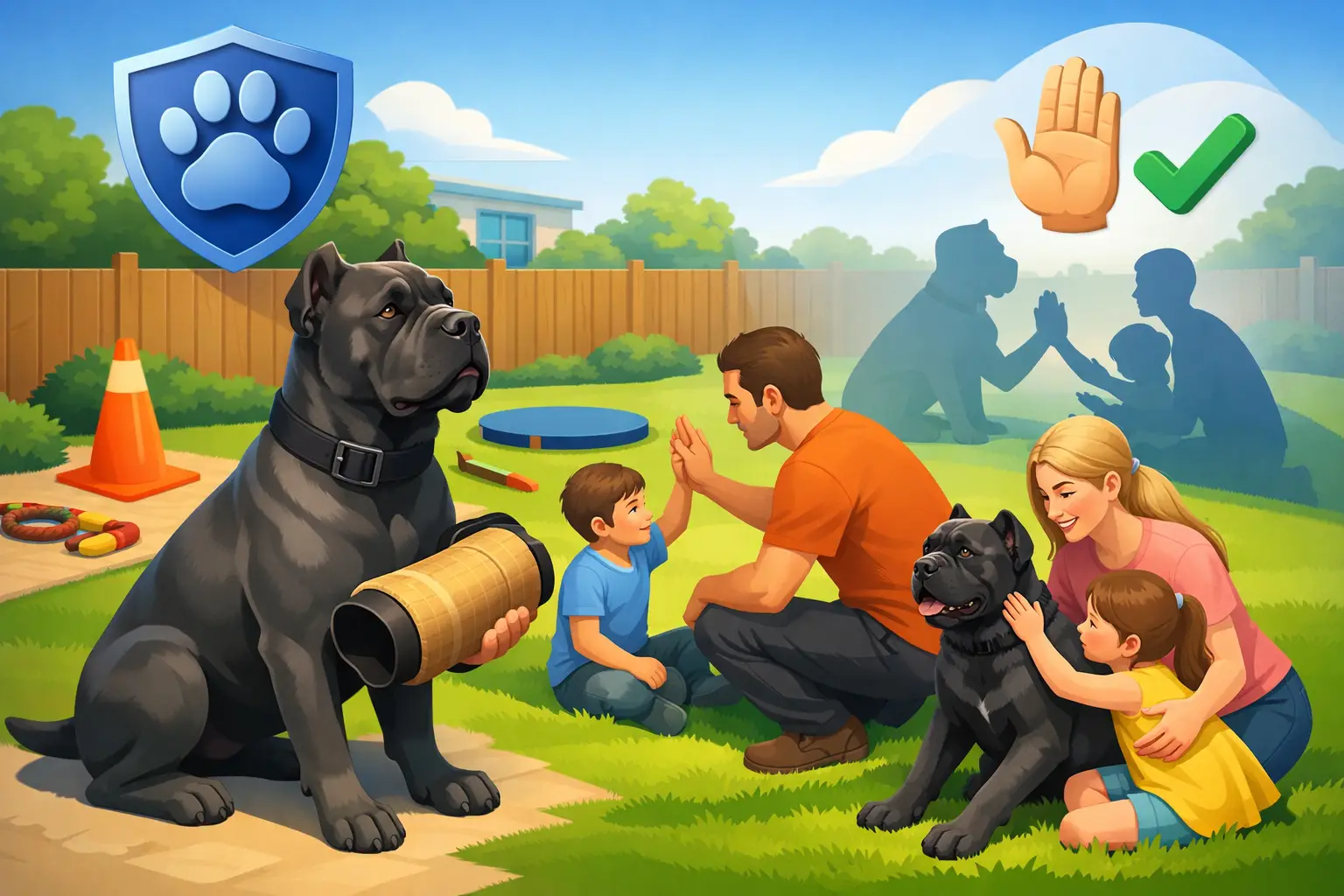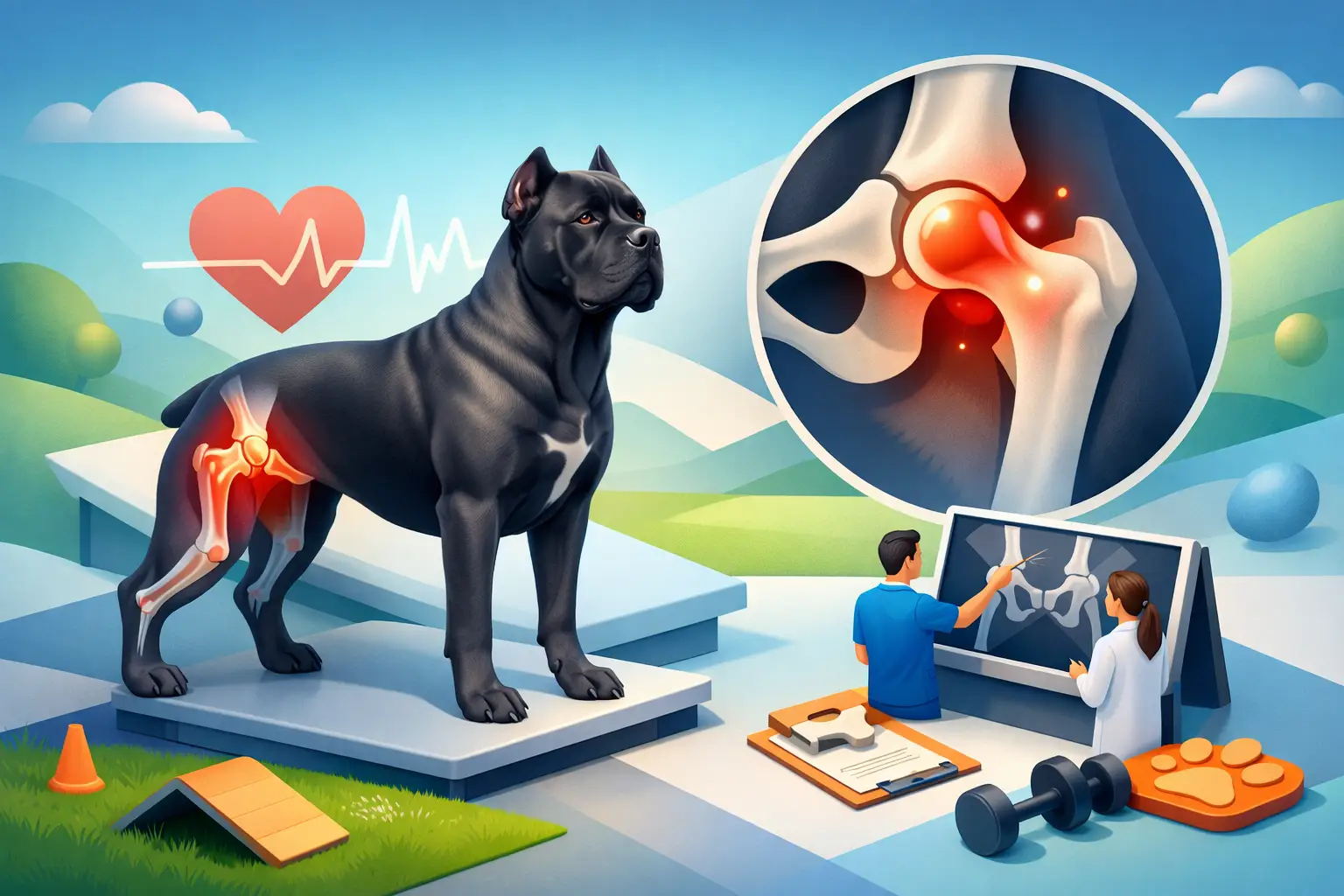

A Cane Corso puppy can look unstoppable: oversized paws, a broad chest, strong bone, and the confident presence that makes this breed unforgettable. But rapid growth comes with real responsibility. This Cane Corso hip dysplasia guide helps families understand what influences hip health, what responsible breeders should evaluate, and how everyday decisions can support a powerful puppy from the first day home.
Hip dysplasia is not a reflection of a dog’s courage, loyalty, or potential to become an exceptional family protector. It is a developmental condition in which the ball-and-socket hip joint does not fit or function as tightly as it should. Over time, looseness in that joint can cause inflammation, altered movement, pain, and arthritis. In a giant, athletic guardian breed, protecting sound structure is part of protecting the dog’s quality of life.
Cane Corso Hip Dysplasia Guide: Start With Genetics
Hip dysplasia has a strong hereditary component. A puppy may inherit a greater risk when parents have poor hip structure or joint laxity, which is why pedigree alone is never enough. Championship titles, size, color, and visual presence can speak to a dog’s legacy, but health evaluation must stand beside them.
Responsible breeding programs use objective hip screening to make informed breeding decisions. Common evaluations include OFA-style radiographs and PennHIP assessments. These tests do not create a guarantee that every puppy will have perfect hips. Genetics are complex, and development is affected by more than one factor. They do, however, give breeders meaningful information about the parents’ orthopedic foundation and help reduce avoidable risk over generations.
Ask direct questions before choosing a puppy. Are both parents evaluated for hips? What health records are available? Has the breeder selected for stable temperament and structural soundness, not simply extreme size? A premium Cane Corso should be bred with the future in mind: the adult dog who can move comfortably, train confidently, and stand guard over the family for years.
At King Corso Kennel, the goal is not merely to raise impressive-looking puppies. It is to place devoted companions with the physical and mental foundation expected of a true Cane Corso.
Growth Is Where Good Intentions Can Go Wrong
Cane Corsos grow fast, often adding substantial weight before their joints, tendons, and coordination have fully matured. Owners sometimes see a large puppy and assume more calories will make that puppy stronger. Usually, the opposite is true. Excessive growth and extra body weight place more force on developing hips.
A lean, steadily growing Cane Corso is generally preferable to a round, heavy puppy pushed to mature too quickly. You should be able to feel the ribs with light pressure, see a defined waist from above, and notice a modest abdominal tuck from the side. Puppies vary in build, so your veterinarian should help confirm the appropriate body condition for your individual dog.
Feed a complete diet formulated for large-breed puppies. These formulas are designed around the controlled energy and mineral balance large-breed growth requires. Avoid adding calcium supplements or improvising with high-calorie foods unless your veterinarian specifically directs you to do so. More calcium is not automatically better, and unbalanced supplementation can interfere with healthy skeletal development.
Measure meals, adjust portions based on your puppy’s actual condition rather than the bag alone, and keep treats modest. Training rewards matter for a breed that thrives with clear guidance, but they still count toward the day’s calories. Small, soft training treats or portions of the puppy’s regular kibble can keep obedience work productive without turning every lesson into excess weight.
Size Should Never Outrun Soundness
Cane Corsos are meant to be substantial dogs, but the breed’s impressive size should be supported by athletic movement. A dog that is too heavy too young may look imposing in photographs while carrying unnecessary stress through the joints. The strongest adult is not always the puppy that grew fastest. It is often the dog whose development was allowed to unfold at a steady, disciplined pace.
Exercise That Builds a Cane Corso Without Beating Up the Joints
Puppies need movement. They need to explore, build coordination, learn confidence, and spend healthy energy. The key is choosing age-appropriate exercise rather than intense, repetitive impact.
Controlled walks on forgiving ground, gentle play, short training sessions, scent games, and supervised free movement in a secure area are excellent options. Let the puppy set a reasonable pace and take breaks. A young Cane Corso does not need forced distance runs to become fit.
Be cautious with repeated jumping, hard landings, sharp turns on slick floors, and long runs beside a bike or adult runner. Stair climbing is not forbidden in every situation, but repeated, fast trips up and down stairs can be hard on a growing giant-breed puppy. Use common sense, provide traction where possible, and carry or assist very young puppies when practical.
The same principle applies to rough play with much larger dogs. Socialization is essential, but a puppy being knocked over, body-slammed, or chased until exhausted is not building sound confidence. Choose calm, well-matched playmates and supervise closely.
Swimming can be a lower-impact way to condition some dogs, provided the water is safe, entry and exit are controlled, and the puppy is comfortable. Not every Cane Corso enjoys it, and no exercise plan replaces guidance from a veterinarian who knows your dog.
Recognize the Early Signs
Hip dysplasia can be subtle. Some puppies show obvious discomfort, while others compensate well and appear normal until activity increases or arthritis develops later. A single awkward step after a hard play session does not confirm a hip problem, but repeated changes deserve attention.
Contact your veterinarian if you notice several of these signs or any sudden, severe lameness:
- A bunny-hop gait when running or climbing
- Stiffness after rest, especially in the rear legs
- Difficulty rising, sitting unevenly, or reluctance to use stairs
- Reduced interest in play, walks, or jumping into the car
- A swaying rear gait, limping, or sensitivity around the hips
Do not assume a young dog is simply clumsy, lazy, or going through a growth spurt. Cane Corsos are stoic, loyal dogs, and many will work through discomfort because they want to stay close to their people. Early veterinary evaluation can clarify whether the issue involves hips, knees, soft tissue, growth plates, or another orthopedic concern.
Diagnosis and Treatment Depend on the Dog
A veterinarian may begin with a physical examination, gait assessment, and diagnostic imaging. X-rays are commonly used to evaluate hip structure and arthritic changes. Depending on the dog’s age and symptoms, your veterinarian may recommend additional assessment or referral to a veterinary orthopedic specialist.
Treatment is not one-size-fits-all. Some dogs benefit greatly from keeping a lean body condition, carefully managed activity, physical rehabilitation, and veterinarian-directed pain control. Others, especially dogs with significant joint instability or pain, may be candidates for surgery. The best option depends on age, degree of disease, lifestyle, anatomy, and the family’s ability to manage recovery.
Avoid internet diagnoses and do not give human pain medication. Many common over-the-counter drugs are dangerous for dogs. A thoughtful treatment plan should protect comfort while preserving the dog’s mobility and confidence.
Build the Home Around Healthy Movement
Small home adjustments can make a meaningful difference, particularly for a large-breed puppy learning where its body is in space. Add non-slip runners to slick tile or hardwood, keep nails trimmed for traction, and use a ramp or controlled assistance for frequent vehicle entry. Provide a supportive bed in a calm space where your puppy can truly rest after training and play.
Training also protects the body. Teach a reliable leash walk, a calm wait at doors, and an invitation-only approach to furniture or vehicles. These are not just manners. They reduce frantic lunges, uncontrolled jumping, and the kind of daily chaos that can lead to injury.
A Cane Corso’s presence is built on more than power. It is built on composure, sound movement, and a family that understands the responsibility behind bringing home an elite guardian. Choose a breeder who values health alongside legacy, keep your puppy lean and appropriately active, and involve your veterinarian early whenever movement changes. Those steady choices give your companion the strongest possible chance to grow into the confident protector your home deserves.